
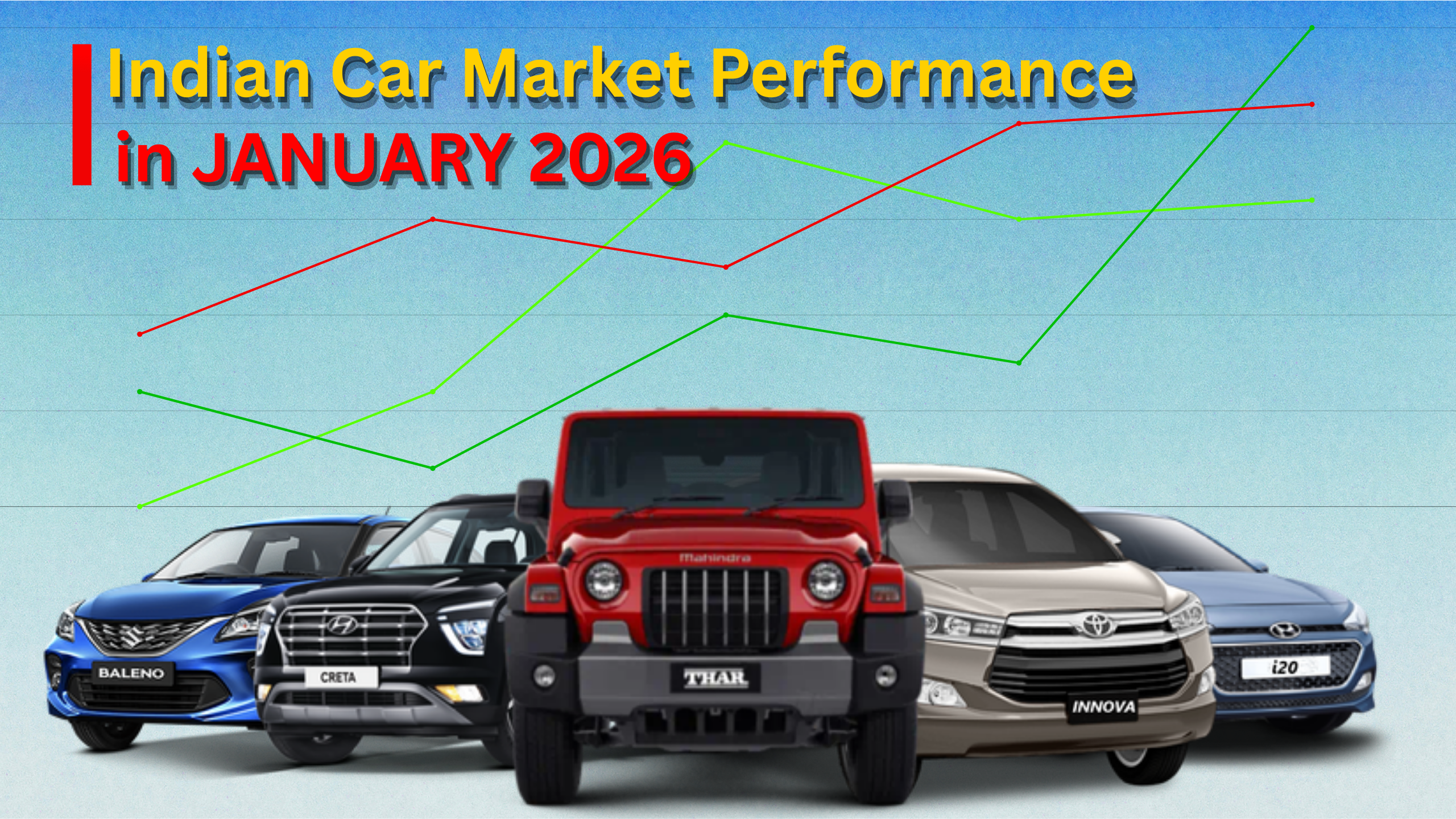
The Indian passenger vehicle market began 2026 with strong momentum, and January sales figures provide a clear picture of current leaders and emerging trends. From mass-market hatchbacks to premium SUVs and electric vehicles, buyer preferences continue to evolve rapidly.
Based on government vehicle registration data, here are the Top 10 car manufacturers in India by sales volume in January 2026, ranked from 10th to 1st. This list also highlights recent launches that could influence rankings in the coming months.
Table of Contents
11. Nissan – 2,297 units
Nissan finishes January 2026 in tenth place with total sales of 2,297 units. The brand maintains a limited but focused presence in the Indian market. While volumes remain modest, Nissan continues to attract buyers looking for affordable compact SUVs and low ownership costs.
To improve its ranking, Nissan will need stronger product refreshes and a broader lineup to compete effectively in India’s fast-growing SUV-dominated market.
10. Renault – 4,685 units
Renault takes ninth position with 4,685 units sold in January 2026. A major development for the brand this month is the launch of the new-generation Renault Duster 2026.
The Duster nameplate carries strong brand recall in India, especially in the mid-size SUV segment. While its impact is not fully visible in January figures, the Duster’s return is expected to boost Renault’s sales in the upcoming months as bookings convert into deliveries and showroom footfall increases.
9. Honda – 5,555 units
Honda ranks eighth with 5,555 units sold. Known for engine refinement, reliability, and low long-term maintenance costs, Honda continues to maintain a stable customer base in urban markets.
However, with Indian buyers increasingly preferring SUVs over sedans, Honda’s growth now depends on expanding its SUV and hybrid offerings while maintaining its strong reputation for quality.
8. MG Motors – 5,862 units
MG Motors India secures eighth position with 5,862 units sold in January 2026. The brand’s performance is supported by steady demand for models like the Hector, ZS EV, and Comet EV.
MG continues to strengthen its presence in the electric vehicle space while also maintaining relevance in the mid-size SUV segment. With its growing EV portfolio and focus on connected technology features, MG is gradually building a loyal customer base in India
7. Skoda & Volkswagen – 9,182 units (combined)
Škoda and Volkswagen together record 9,182 units and secure seventh position.
Both brands introduced new products and updates in January 2026, increasing showroom activity and brand visibility. Their focus on:
- Strong build quality
- Turbo-petrol performance
- High safety standards
continues to attract premium-segment buyers. Although current volumes remain lower than mass-market brands, recent launches could help strengthen their market position over the next few months.
6. Kia – 28,343 units
Kia finishes sixth with 28,343 units sold in January 2026. The company recently launched the next-generation Kia Seltos, one of its most important models.
Despite the launch, Kia’s January ranking remains outside the top five. This is likely due to delivery ramp-up timelines and customers waiting for real-world feedback before purchasing. Sales performance in the next few months will show whether the new Seltos can push Kia higher up the rankings.
5. Toyota – 33,359 units
Toyota secures fifth place with 33,359 units sold.
A significant portion of Toyota’s India sales comes from models developed in partnership with Maruti Suzuki (rebadged products), which help maintain competitive volumes in the mass market. While Toyota also sells independent models and hybrids, this partnership plays an important role in its overall ranking.
Toyota’s strength lies in:
- Brand trust
- High resale value
- Hybrid technology
These factors help it maintain a solid position despite fierce competition.
4. Tata Motors – 57,199 units
Tata Motors ranks fourth with 57,199 total units sold in January 2026, including:
- ICE vehicles: 49,895 units
- Electric vehicles: 7,304 units
Tata continues to lead India’s electric passenger vehicle segment while maintaining strong sales of petrol and diesel models.
The company also launched its highly anticipated Tata Sierra in January 2026. Despite this major launch, Tata could not secure a top-two position, mainly due to the much higher volumes achieved by Mahindra and Maruti Suzuki. However, the Sierra’s performance in the coming months will determine its long-term impact.
3. Hyundai – 62,923 units
Hyundai takes third place with 62,923 units sold.
Hyundai’s success comes from:
- Wide product range
- Strong service network
- Consistent quality and design
- High technology adoption
The brand continues to appeal to both urban and semi-urban customers and remains one of the most stable performers in the Indian automobile market.
2. Mahindra & Mahindra – 85,343 units
Mahindra secures second position with 85,343 units sold, driven largely by its dominance in the SUV segment.
In January 2026, Mahindra also launched the XUV 7XO, a facelifted version of the XUV700. The new model has generated strong interest and long waiting periods in several markets. If production keeps pace with demand, Mahindra could further strengthen its position in the coming months.
Mahindra’s strategy of focusing on rugged, feature-rich SUVs continues to align well with Indian buyer preferences.
1. Maruti Suzuki – 209,555 units
Maruti Suzuki remains the undisputed market leader with 209,555 units sold in January 2026.
The company’s dominance is supported by:
- India’s largest dealership and service network
- Wide product portfolio across price segments
- Affordable ownership costs
- Strong resale value
Maruti Suzuki’s sales volume alone exceeds the combined sales of several competing brands, making it extremely difficult for rivals to challenge its leadership in the near future.
| Rank | Car Manufacturer | Total Sales (Units) | Key Notes |
|---|---|---|---|
| 1 | Maruti Suzuki | 209,555 | Market leader with widest product range and dealer network |
| 2 | Mahindra & Mahindra | 85,343 | Strong SUV demand; launched XUV 7XO (XUV700 facelift) |
| 3 | Hyundai | 62,923 | Consistent performer with wide urban & rural presence |
| 4 | Tata Motors | 57,199 | ICE: 49,895 units, EV: 7,304 units; launched Tata Sierra |
| 5 | Toyota | 33,359 | Large share from rebadged Maruti Suzuki models |
| 6 | Kia | 28,343 | Launched next-gen Seltos; impact expected in coming months |
| 7 | Skoda + Volkswagen | 9,182 (combined) | New launches and updates increased brand visibility |
| 8 | MG Motors | 5862 | strengthen its presence in the electric vehicles. |
| 9 | Honda | 5,555 | Stable sales; focus on reliability and urban buyers |
| 10 | Renault | 4,685 | Launched new-gen Duster; sales may rise in coming months |

Market Trends in January 2026
Three major trends emerge from January 2026 sales data:
- SUV preference continues to rise, benefiting brands like Mahindra, Hyundai, Kia, and Tata.
- Electric vehicle adoption is increasing, with Tata Motors leading EV volumes among mainstream manufacturers.
- Launch timing affects rankings, as many new models show their full impact in later months rather than immediately at launch.
Conclusion
The Top 10 car companies by sales in January 2026 highlight how India’s automobile market is evolving with a strong focus on SUVs, growing EV adoption, and intense competition among leading manufacturers.
Renault’s new Duster, Kia’s next-gen Seltos, Tata’s Sierra, Mahindra’s XUV 7XO, and recent launches from Skoda and Volkswagen are expected to influence future monthly rankings.
These sales figures are based on official government vehicle registration data from India’s transport authority dashboards. Since this data is based on vehicle registrations, it may differ from manufacturer press releases, which often report wholesale dispatches or different reporting periods. Minor variations between sources are therefore normal.