
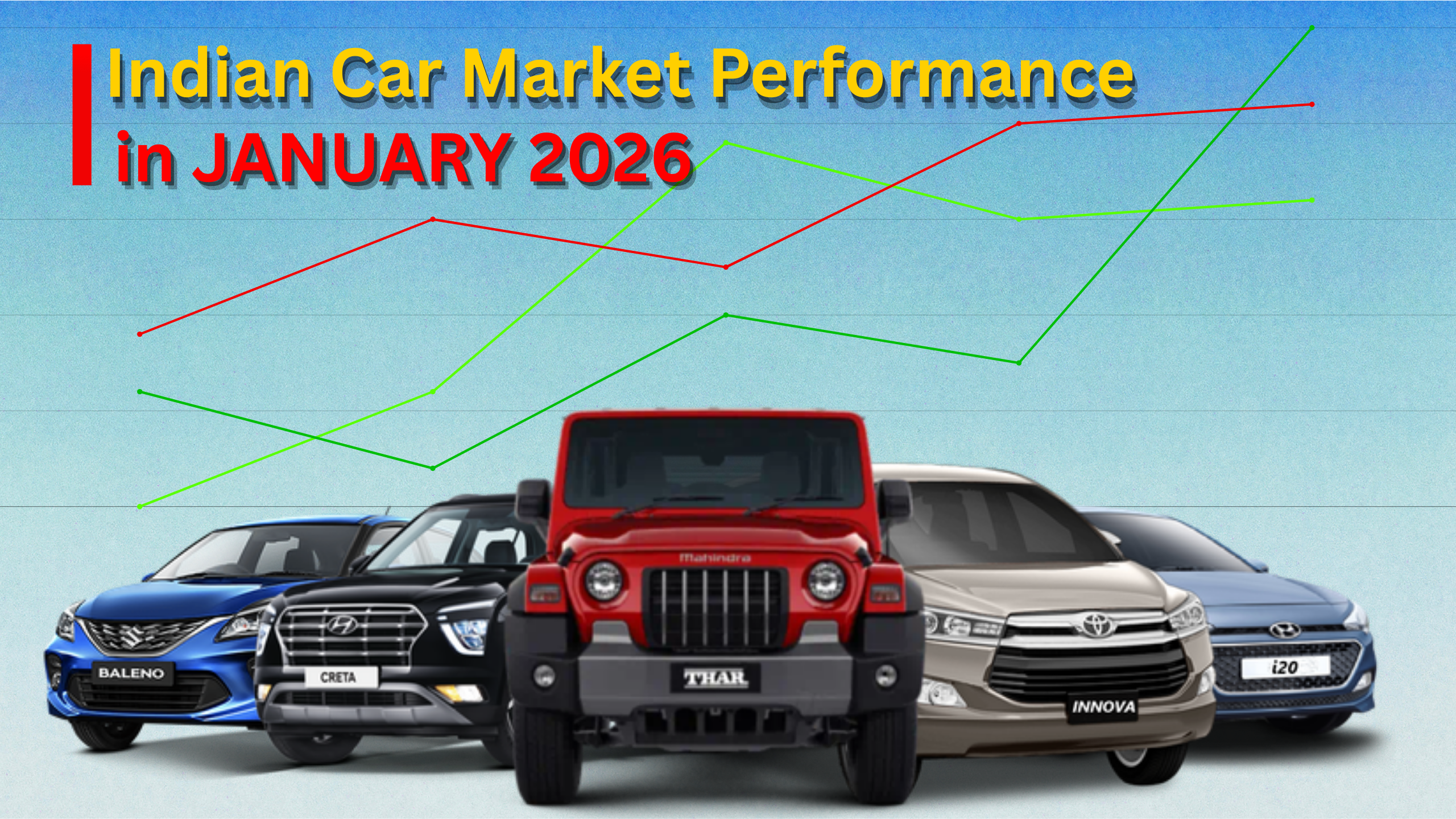
India’s car market didn’t just grow in January 2026, it exposed a deeper shift in buyer priorities. SUVs are tightening their grip. Electric vehicles are no longer niche. And while Maruti Suzuki remains the undisputed leader, the real battle is happening just behind it.
Based on official vehicle registration data, the Top 10 car manufacturers in India by sales in January 2026 reveal not just who’s winning, but who’s adapting fast enough to survive, because in today’s market, legacy alone doesn’t guarantee leadership.
10. Nissan – 2,297 Units: Still Present, But Is It Still Relevant?
Nissan sold just 2,297 units in January 2026, placing it at the bottom of the top 10. That number raises a serious question: can a brand survive in India with such limited volume and product diversity? Nissan’s strategy remains focused on affordability and low ownership costs. But India’s market is evolving rapidly, and buyers now want modern features, strong design, and advanced safety. Without new launches or aggressive expansion, Nissan risks becoming invisible in one of the world’s fastest-growing car markets.
9. Renault – 4,685 Units: Will the New Duster Save Renault?
Renault managed 4,685 units, barely ahead of Nissan, but January may not tell the full story. The launch of the Renault Duster 2026 could be Renault’s most important comeback attempt in years. The Duster once dominated the mid-size SUV segment, but the market moved on. Now Renault must prove that nostalgia alone isn’t its strategy, because in 2026, buyers care less about legacy, and more about relevance.
8. Honda – 5,555 Units: Strong Reputation, But Weak SUV Presence
Honda recorded 5,555 units, showing stable, but limited, growth. The problem isn’t Honda’s engineering. It’s product strategy. Indian buyers have shifted aggressively toward SUVs. Honda’s sedan-heavy lineup no longer aligns with market demand. Unless Honda expands its SUV portfolio quickly, it risks losing long-term competitiveness, because reliability alone doesn’t drive market dominance anymore.
7. MG Motor – 5,862 Units: EV Strategy Showing Early Signs of Success
MG Motor sold 5,862 units, slightly ahead of Honda. MG’s strategy is clear: embrace electrification early. Models like the ZS EV and Comet EV are helping MG establish itself as a forward-looking brand. but EV growth alone won’t guarantee success. MG must balance electric innovation with strong petrol SUV offerings to scale its presence.
6. Skoda & Volkswagen – 9,182 Units Combined: Premium Focus Limits Volume
Skoda and Volkswagen together sold 9,182 units, reflecting steady premium-segment demand.
Their strengths remain clear:
- Strong build quality
- High safety ratings
- Turbo-petrol performance
But premium positioning limits mass adoption. Unless pricing becomes more competitive, volume growth will remain restricted. Because India is still fundamentally a price-sensitive market.
5. Kia – 28,343 Units: Is the New Seltos Enough to Regain Momentum?
Kia recorded 28,343 units, driven largely by the Seltos and Sonet. The launch of the next-generation Kia Seltos 2026 could reshape Kia’s position, but early adoption hesitation is common. Buyers often wait to assess real-world performance. If demand accelerates, Kia could climb higher in the coming months. If not, competitors may continue pulling ahead.
4. Toyota – 33,359 Units: Partnership Strength or Strategic Weakness?
Toyota sold 33,359 units, benefiting heavily from its partnership with Maruti Suzuki. Rebadged models help Toyota maintain volume. But this raises a strategic question: Is Toyota leading through innovation — or relying on collaboration? Toyota’s true strength lies in hybrid technology and brand trust, but to move higher, it must expand independent product offerings.
3. Tata Motors – 57,199 Units: EV Leader, But Still Behind Traditional Giants
Tata Motors sold 57,199 units, including:
- ICE vehicles: 49,895 units
- Electric vehicles: 7,304 units
Tata continues to dominate India’s EV segment. The launch of the Tata Sierra 2026 could strengthen Tata’s position further, but EV leadership alone isn’t enough to surpass Hyundai or Mahindra, yet. Scaling production and maintaining reliability will determine Tata’s future ranking.
2. Mahindra – 85,343 Units: The SUV Strategy That’s Paying Off
Mahindra sold 85,343 units, driven almost entirely by SUVs. The launch of the XUV 7XO (XUV700 facelift) reinforces Mahindra’s aggressive SUV focus.
Mahindra’s formula is simple:
- Bold design
- Strong road presence
- Feature-loaded vehicles
This aligns perfectly with Indian buyer preferences. Mahindra isn’t chasing market trends. It’s defining them.
1. Maruti Suzuki – 209,555 Units: Still Dominant — But For How Long?
Maruti Suzuki sold an astonishing 209,555 units, more than double Mahindra’s volume.
Its strengths remain unmatched:
- Largest dealership network
- Wide product range
- Affordable ownership
- Strong resale value
But dominance doesn’t guarantee permanence. As EV adoption increases and SUVs evolve, Maruti must continue adapting, because even market leaders can fall behind if innovation slows.
Car Sales Ranking India January 2026 (Full Table)
| Rank | Manufacturer | Sales Units |
|---|---|---|
| 1 | Maruti Suzuki | 209,555 |
| 2 | Mahindra | 85,343 |
| 3 | Hyundai | 62,923 |
| 4 | Tata Motors | 57,199 |
| 5 | Toyota | 33,359 |
| 6 | Kia | 28,343 |
| 7 | Skoda + Volkswagen | 9,182 |
| 8 | MG Motor | 5,862 |
| 9 | Honda | 5,555 |
| 10 | Renault | 4,685 |
| 11 | Nissan | 2,297 |
Key Trends From January 2026 Car Sales Data
SUVs Are Now the Default Choice
SUV demand continues to grow rapidly. Brands like Mahindra, Hyundai, and Tata are benefiting the most.Sedans and hatchbacks are losing market share.
Electric Vehicle Adoption Is Accelerating
Tata Motors leads EV sales. MG Motor is expanding its EV lineup. EV adoption is no longer experimental; it’s inevitable.
Product Launch Timing Directly Impacts Rankings
New launches like:
- Tata Sierra
- Renault Duster
- Kia Seltos
- Mahindra XUV 7XO
will influence rankings significantly in the coming months.
Wrapping it up
The January 2026 car sales report reveals more than just numbers.
It reveals a shift in power.
Maruti Suzuki remains dominant — but Mahindra, Tata, and Hyundai are evolving faster.
SUVs and EVs are redefining buyer priorities.
Legacy alone is no longer enough.
Innovation, adaptability, and product relevance will determine future winners.
And the real battle for India’s car market leadership has only just begun.