
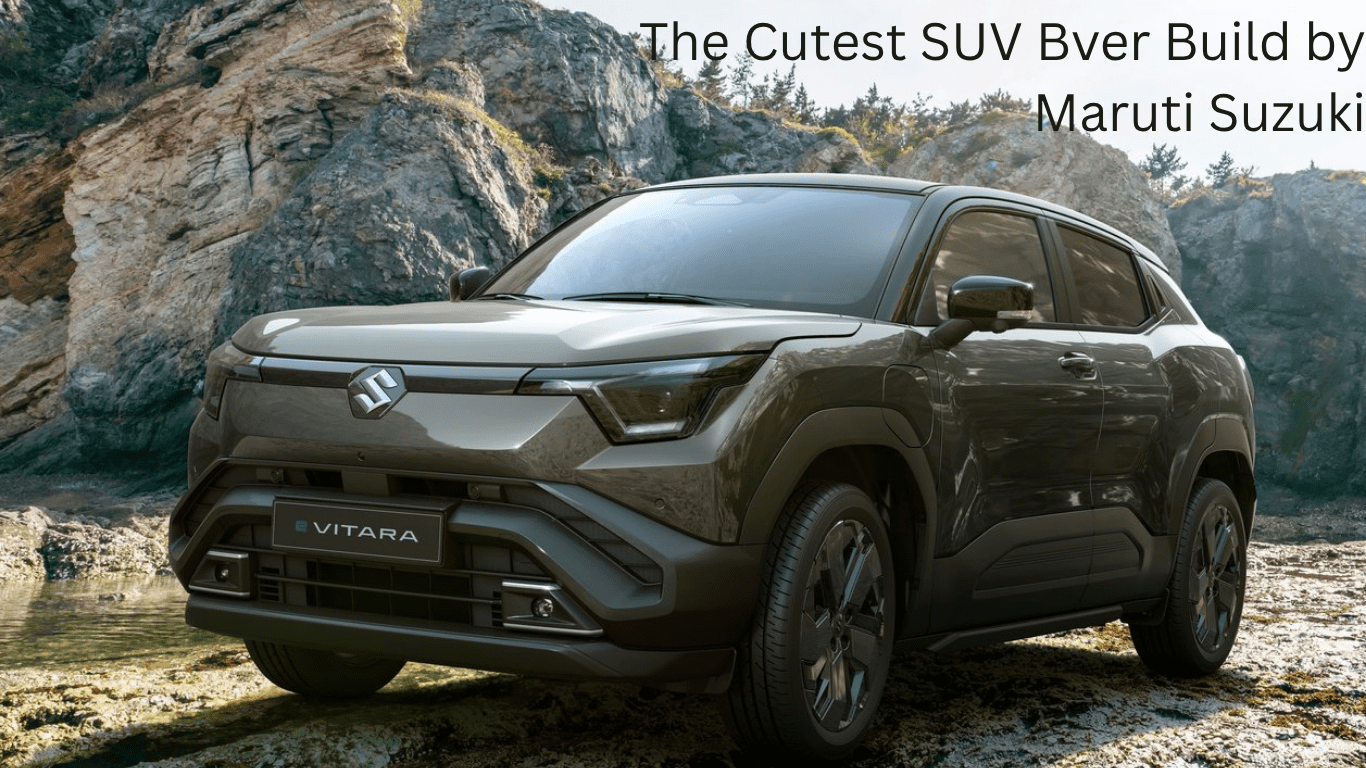
For decades, Maruti Suzuki has defined how India drives. From the humble Alto to the wildly successful Swift and Brezza, the company has built its empire not on flashy innovation, but on understanding what Indian buyers actually want: reliability, efficiency, affordability, and easy service. But when electric vehicles began gaining momentum, something unusual happened, Maruti hesitated.
While Tata rapidly captured EV market share and Mahindra pushed into high-performance electric SUVs, Maruti stayed largely absent. Now, with the launch of the e-Vitara in 2026, that hesitation is finally turning into action. The real question isn’t whether Maruti can build an electric SUV. The real question is: Can Maruti dominate the EV era the same way it dominated petrol cars, or has the market already moved on without it?
Table of Contents
Not Just Another Electric SUV — This Is Maruti’s First Serious EV Platform
Unlike many early EVs that were simply petrol cars converted into electric ones, the e-Vitara is built on a dedicated electric platform developed specifically for battery vehicles. This is a major shift in Maruti’s engineering philosophy. A dedicated EV platform allows better battery placement, improved structural balance, and increased interior space due to the flat floor design. It also improves driving stability and crash protection.
This isn’t an experiment, it’s a foundation for Maruti’s electric future. More importantly, the e-Vitara isn’t just for India. It is being manufactured in Gujarat and exported globally, showing that Suzuki sees India as a central hub in its worldwide EV strategy. That alone signals serious intent.
Range: Maruti Finally Solves the Biggest EV Fear
For most Indian buyers, the biggest barrier to buying an electric vehicle isn’t price or performance—it’s range anxiety. Maruti appears to have understood this clearly.
| Variant | Battery Pack | Expected Range | Power Output |
|---|---|---|---|
| Standard | 38–40 kWh | 320–350 km | 100–110 bhp |
| Long Range | 48–50 kWh | 400–450 km | 120–130 bhp |
This puts the e-Vitara among the longest-range electric SUVs currently available in India. In practical terms, this means many users could drive for nearly a week without needing to recharge during normal city use. That kind of range changes the conversation from “Can I use an EV?” to “Why am I still using petrol?”
Performance Isn’t Aggressive — But That Might Be the Smartest Strategy
The e-Vitara produces between 143 hp and 172 hp, depending on the battery variant. On paper, this isn’t segment-leading. Some competitors offer more aggressive acceleration and higher power figures. But Maruti has never focused on extreme performance. Instead, it focuses on balance, delivering enough power for daily driving while maximising efficiency and reliability.
This approach aligns with how most Indians actually use their vehicles: city commutes, family travel, and predictable daily usage. In that context, efficiency matters more than speed.
Safety: Maruti Is Clearly Trying to Change Its Image
For years, safety criticism followed Maruti. Many earlier models performed poorly in crash tests, damaging the brand’s perception among safety-conscious buyers. The e-Vitara appears to be Maruti’s attempt to rewrite that narrative. The SUV has achieved a 5-star Bharat NCAP safety rating, reflecting significant improvement in structural strength and occupant protection.
Expected safety features include:
- Six airbags
- Electronic Stability Program
- Hill hold assist
- Strong battery protection systems
- Advanced structural reinforcement
This isn’t just about meeting regulations; it’s about restoring buyer confidence.
Manufacturing Strategy Reveals Long-Term Commitment
Maruti is not treating EVs as a side project. The company has invested heavily in EV production infrastructure in India. Battery production partnerships with global suppliers ensure localization, which reduces costs and improves long-term serviceability.
Local production also protects Maruti from global supply disruptions and allows more aggressive pricing strategies. This level of investment shows that Maruti expects EVs to become central to its future—not optional.
The Biggest Advantage Competitors Cannot Easily Match
Technology can be copied. The range can be improved. Features can be added. But trust takes decades to build. Maruti’s biggest strength is its unmatched service network and brand familiarity. With thousands of service centres across India, buyers feel confident knowing support is always accessible.
This psychological comfort plays a huge role in purchase decisions, especially for new technology like EVs. Many buyers may choose the e-Vitara not because it has the best specifications, but because it comes from a brand they trust.
Pricing Could Decide Everything
The expected price range of ₹17 lakh to ₹22.5 lakh places the e-Vitara directly in competition with India’s most popular electric SUVs. This pricing is crucial. If Maruti positions the e-Vitara slightly more competitively while maintaining strong range and reliability, it could rapidly capture significant market share.
But if pricing climbs too high, Maruti risks losing its traditional advantage of affordability. Maruti’s success has always depended on delivering strong value, not just good products.
The Timing Might Be More Strategic Than It Appears
Many critics argue that Maruti entered the EV market too late. But entering early doesn’t always guarantee long-term dominance.
By waiting, Maruti was able to:
- Study consumer behavior
- Observe competitor strengths and weaknesses
- Build EV-specific manufacturing infrastructure
- Prepare battery localization strategies
Instead of experimenting publicly, Maruti prepared quietly. Now it enters the market when EV adoption is accelerating, and infrastructure is improving. This timing could work in its favour.
Competitor Comparison Table
Here’s a quick comparison of the expected Maruti Suzuki e-Vitara with its key rivals:
| Feature | e-Vitara (Expected) | Tata Nexon EV | MG ZS EV | Mahindra XUV400 |
|---|---|---|---|---|
| Range(ARAI) | 350–450 km | 325–465 km | 461 km | 456 km |
| Battery | 38–50 kWh | 30–40.5 kWh | 50.3 kWh | 34.5–39.4 kWh |
| Power | 110–130 bhp | 127 bhp | 174 bhp | 150 bhp |
| On-Road Price Delhi | ₹16–22 L ( expected) | ₹15–21 L | ₹23–26 L | ₹16–22 L |
| Fast Charging | Yes | Yes | Yes | Yes |
| Network Strength | Very High | High | Moderate | Growing |
The biggest advantage Maruti has over its competitors is its vast dealership and service network, which has over 3000 touchpoints across India. This could help address the biggest concern EV buyers face—maintenance and service accessibility.
Wrapping it up
The e-Vitara represents more than just a new product. It represents Maruti Suzuki’s transition into a new automotive era. It may not be the most powerful EV. It may not be the most futuristic. But it doesn’t need to be. If Maruti delivers on its core strengths, reliability, efficiency, strong service support, and competitive pricing, the e-Vitara could achieve something more important than innovation headlines.
It could achieve mass adoption, and when Maruti achieves mass adoption, market dominance usually follows. The real question isn’t whether the e-Vitara is good enough. The real question is whether India is ready for Maruti to dominate the EV market all over again.