
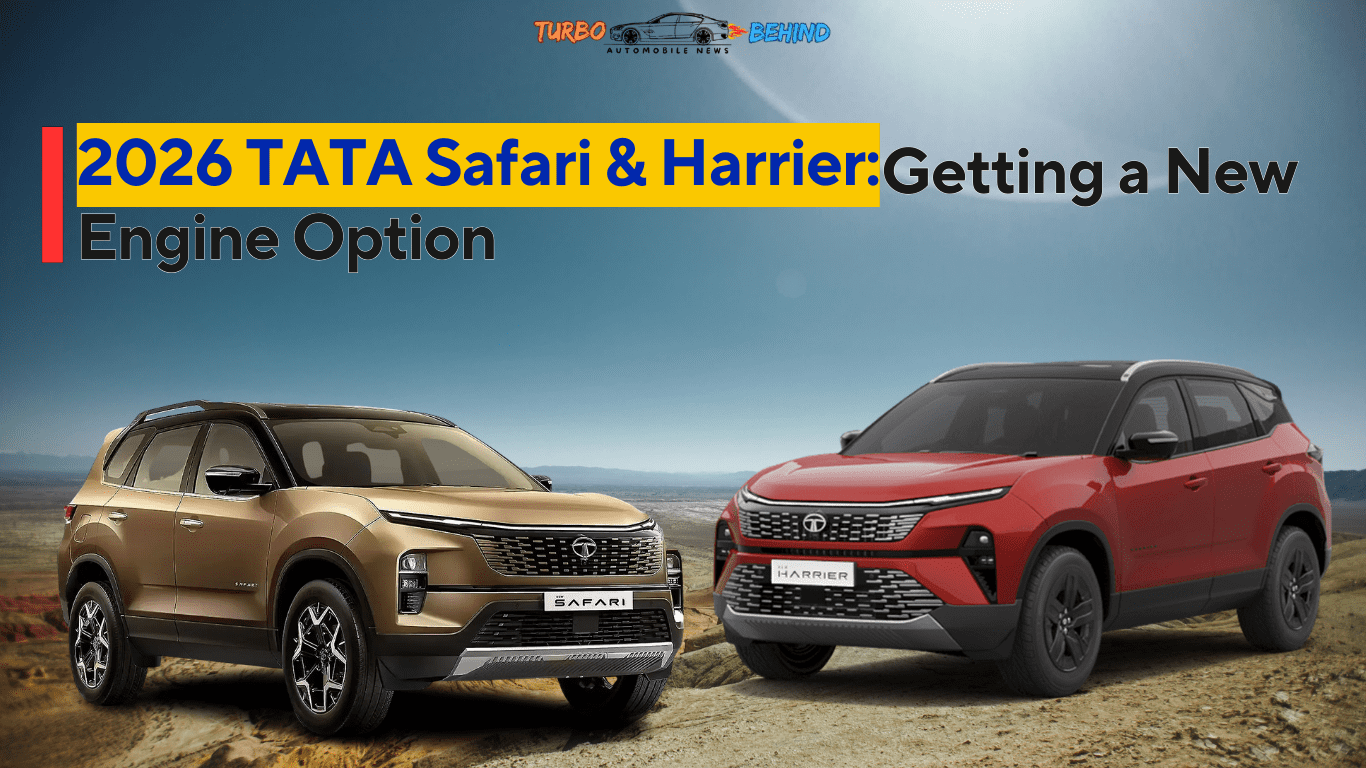
For years, the Tata Safari and Harrier represented a clear philosophy: big SUVs need big diesel engines. That formula worked. Diesel offered torque, efficiency, and long-distance confidence. But now Tata Motors is rewriting that rulebook.
With the introduction of its new 1.5-litre Hyperion TGDi turbo-petrol engine, Tata is bringing petrol power to its flagship SUVs for the first time. This isn’t just an engine swap—it’s a strategic shift driven by changing customer behavior, stricter emission norms, and the broader transition toward electrification.
But the real question buyers care about isn’t regulatory compliance. It’s simple: can a smaller 1.5-litre petrol engine truly handle the size, weight, and expectations of a full-size SUV like the Safari or Harrier?
Meet the New Hyperion Engine: Tata’s Future-Ready Turbo-Petrol Powertrain
The upcoming petrol variants of the Safari and Harrier will be powered by Tata’s newly developed 1.5-litre Hyperion TGDi (Turbocharged Gasoline Direct Injection) engine, a modern, efficiency-focused powertrain designed for performance, refinement, and future emission compliance.
Key Specifications
- Engine displacement: 1,498 cc
- Power output: approximately 168–170 bhp
- Torque output: 280 Nm
- Torque band: 2,000–3,500 rpm
- Construction: lightweight aluminium block
- Turbocharger: water-cooled variable geometry turbo
- Transmission options: 6-speed manual and expected automatic (DCT or torque converter)
- Compliance: BS6 Phase II and future E20 fuel compatibility
On paper, these figures position the Hyperion engine competitively within the modern turbo-petrol SUV segment. But specifications alone don’t tell the full story.
Why Tata Is Introducing Petrol Engines in Safari and Harrier Now
This move isn’t random. It’s driven by multiple strategic factors.
1. Petrol SUVs Are Becoming Increasingly Popular
Urban buyers increasingly prefer petrol engines due to:
- Lower initial purchase cost
- Quieter operation
- Easier maintenance
- Reduced emission concerns
Diesel’s traditional advantages are slowly narrowing.
2. Diesel Engines Are Becoming More Expensive to Maintain
Modern diesel engines require complex emission systems like:
- Diesel particulate filters
- Selective catalytic reduction systems
These systems increase manufacturing and maintenance costs. Petrol engines avoid many of these complexities.
3. Preparing for Electrification and Hybrid Transition
Petrol engines integrate more easily with hybrid systems. This makes the Hyperion engine an important stepping stone toward Tata’s future electrified SUV lineup.
Performance Reality: Is 170 bhp and 280 Nm Enough for a Heavy SUV?
This is the most important question, and the answer depends on expectations and usage. In everyday driving conditions, the new engine should deliver strong performance. For city use, highway cruising, and family travel, the Hyperion engine’s output is more than sufficient.
Modern turbocharging ensures strong mid-range torque, which is critical for overtaking and acceleration. Compared to older naturally aspirated petrol engines, this turbo-petrol offers significantly better performance, but compared to diesel, there are trade-offs.
Petrol vs Diesel: Where the Hyperion Engine Wins
1. Superior Refinement and Comfort
Petrol engines are smoother, quieter, and more refined. This improves overall driving comfort, especially in city traffic. Safari and Harrier buyers prioritizing comfort will appreciate this.
2. Lower Entry Price Improves Accessibility
Petrol variants are expected to be priced lower than diesel versions. This makes Safari and Harrier more accessible to new buyers.
3. Better Suitability for Urban Driving
Most SUV owners primarily drive in cities. Petrol engines perform better in stop-and-go conditions. Diesel engines perform best during sustained highway driving.
4. Future-Proof Compliance
The Hyperion engine meets current and future emission regulations. This improves long-term ownership viability.
Where Diesel Still Holds the Advantage
Despite its strengths, the petrol engine cannot completely replace diesel advantages.
1. Lower Torque Than Diesel
The existing 2.0-litre diesel engine produces significantly higher torque.
This matters during:
- Heavy load conditions
- Hill climbing
- Off-road driving
Diesel engines excel in these scenarios.
2. Fuel Efficiency Under Heavy Load
Large SUVs consume more petrol than diesel. High-mileage users may find diesel more economical long-term.
3. Long-Distance Highway Efficiency
Diesel engines remain superior for long highway drives. Frequent highway users will benefit from diesel efficiency.
4. Long-Term Durability Still Needs Real-World Validation
The Hyperion engine is new. Diesel engines have decades of proven reliability in heavy SUVs. Petrol durability will be proven over time.
Real Strategic Reason: Tata Is Preparing for the EV Transition
This petrol engine isn’t just about current buyers, it’s about future flexibility. As Tata expands its EV lineup, petrol engines will serve as transitional powertrains.
This allows Tata to:
- Meet emission regulations
- Reduce diesel dependency
- Prepare for hybrid and EV integration
The Hyperion engine represents a bridge between diesel and electric future.
Who Should Buy the Petrol Safari or Harrier?
The petrol variant makes the most sense for buyers who:
- Primarily drive in cities
- Drive under 12,000 km annually
- Prioritize comfort and refinement
- Want lower initial cost
- Don’t require maximum towing capability
For these buyers, petrol offers clear advantages.
Who Should Still Choose Diesel?
Diesel remains the better option for buyers who:
- Frequently travel long distances
- Carry heavy loads regularly
- Drive in mountainous terrain
- Prioritize fuel efficiency
- Want proven long-term durability
Diesel remains unmatched in heavy-duty applications.
What This Means for India’s SUV Market
Tata’s decision reflects a larger shift in the Indian SUV market. Petrol engines are becoming more viable, even in large SUVs. At the same time, EV adoption continues to accelerate. Manufacturers are diversifying powertrain options to remain competitive. The Safari and Harrier petrol variants ensure Tata remains relevant across all segments.
Wrapping It Up
The introduction of Tata’s Hyperion turbo-petrol engine in the Safari and Harrier marks a significant evolution in Tata’s SUV strategy. It improves refinement, reduces entry price, and aligns the vehicles with future emission and electrification trends. For urban buyers, family users, and moderate-distance drivers, the petrol engine will deliver excellent performance, comfort, and practicality. It makes these flagship SUVs more accessible and easier to live with daily.
However, diesel remains the better option for heavy-duty usage, frequent highway driving, and maximum torque requirements. Ultimately, the petrol Safari and Harrier aren’t replacing diesel; they’re expanding buyer choice. And in a market rapidly moving toward electrification, flexibility may be Tata’s biggest advantage