
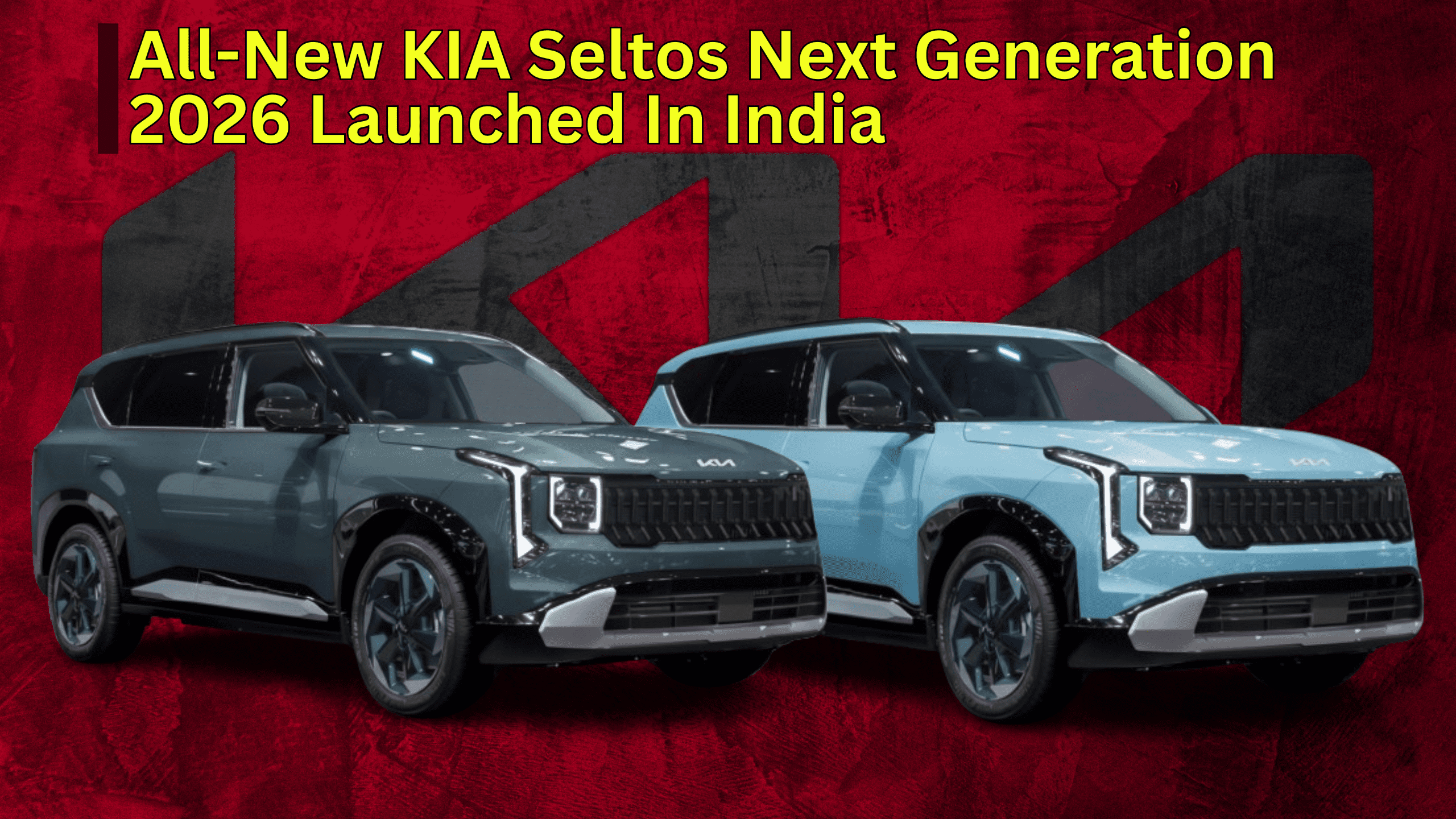
The compact SUV segment in India is no longer just about practicality—it’s about technology, electrification, performance, and brand perception. With the launch of the all-new Kia Seltos 2026, Kia isn’t simply refreshing its best-selling SUV. It’s attempting to redefine its position in one of India’s most competitive automotive battlegrounds.
The next-generation Seltos arrives with a sharper design, upgraded interiors, expanded powertrain options—including a hybrid—and a stronger technology package. But its biggest challenge may not be Hyundai, MG, or Volkswagen. It’s the Tata Sierra, a bold new entrant designed to disrupt the segment with aggressive pricing and modern engineering.
The real question is no longer whether the new Seltos is better than the old one. It’s whether it’s good enough to defeat the Sierra—and retain its dominance.
Exterior Design: Evolution That Looks Like a Complete Reinvention
At first glance, the new Seltos makes it clear this isn’t just a facelift.
Kia has redesigned the SUV with a stronger, more mature visual identity. The company’s latest design language focuses on muscular proportions and sharper detailing.
Key design upgrades include:
- Wider and more aggressive front grille
- Slimmer, sharper LED headlamps
- Full-width LED tail-light signature
- More pronounced wheel arches
- Upright, SUV-focused stance
These changes don’t just improve aesthetics—they improve perceived strength and road presence.
The new Seltos now looks less like a crossover and more like a true SUV.
This matters in India, where road presence influences buying decisions as much as performance.
Interior and Technology: Where Kia Is Trying to Stay Ahead
The biggest transformation lies inside the cabin.
Kia understands that today’s buyers expect premium interiors—even in mid-size SUVs.
Expected upgrades include:
- Dual integrated widescreen displays
- Fully digital instrument cluster
- Larger infotainment touchscreen
- Premium soft-touch materials
- Cleaner dashboard design
- Improved center console ergonomics
The focus is clear: make the Seltos feel more expensive than its price tag suggests.
This is where Kia has historically excelled—and where Tata’s Sierra presents its biggest challenge.
Hybrid Powertrain: The Most Important Upgrade for Long-Term Competitiveness
The headline technical upgrade is the introduction of a hybrid powertrain.
This aligns with Kia’s global electrification strategy.
Expected engine lineup includes:
- 1.5-litre naturally aspirated petrol
- 1.5-litre turbo petrol
- 1.5-litre diesel (market dependent)
- New hybrid powertrain option
The hybrid system could fundamentally change the Seltos’ ownership economics.
Hybrid advantages include:
- Improved fuel efficiency
- Lower emissions
- Better urban driving efficiency
- Reduced long-term fuel costs
In a market gradually transitioning toward electrification, hybrid technology offers a major competitive advantage.
This could be Kia’s most important strategic move.
Features and Equipment: Technology as a Competitive Weapon
The new Seltos is expected to raise the technology benchmark in its segment.
Expected features include:
- Large dual-screen infotainment system
- Wireless Apple CarPlay and Android Auto
- Panoramic sunroof
- Ventilated front seats
- Premium sound system
- 360-degree camera
- Connected car technology
- Over-the-air updates
Safety will also be a major focus.
Expected safety features include:
- Advanced driver assistance systems (ADAS)
- Adaptive cruise control
- Lane keep assist
- Multiple airbags
- Improved structural safety
These features directly influence buying decisions in this segment.
Expected Price in India: Premium Positioning With Strategic Flexibility
Expected price range:
- Base variants: approximately ₹12 lakh (ex-showroom)
- Top variants: ₹18 lakh+ depending on hybrid and tech features
This positions the Seltos slightly above value-focused competitors like the Tata Sierra.
But Kia isn’t competing on price alone.
It’s competing on perceived premium value.
Kia Seltos vs Tata Sierra: The Real Battle That Will Define This Segment
The Tata Sierra represents a fundamentally different approach.
While Kia focuses on premium appeal, Tata emphasizes aggressive pricing and strong value.
Where Seltos Has the Advantage
- Hybrid powertrain availability
- More premium interior experience
- Stronger infotainment system
- More refined driving experience
- Global brand perception
Where Sierra Remains Dangerous
- Lower starting price
- Strong value proposition
- Competitive features at lower cost
- Modern design and platform
The Sierra appeals to rational buyers focused on value.
The Seltos appeals to emotional buyers focused on premium experience.
Both strategies are effective.
Driving Dynamics and Performance: Turbo Variants Will Matter Most
Performance remains critical in this segment.
Turbo-petrol variants are expected to deliver:
- Strong acceleration
- Improved highway performance
- More engaging driving experience
Hybrid variants will focus on efficiency rather than outright performance.
This gives buyers multiple choices based on priorities.
Strategic Importance: Why the New Seltos Matters Beyond Sales Numbers
The Seltos isn’t just another SUV for Kia.
It’s a brand-defining vehicle.
The original Seltos established Kia as a serious competitor in India.
The new generation must defend that position.
Failure would allow rivals like Tata to gain ground.
Success would strengthen Kia’s long-term dominance.
This launch is strategically critical.
Wrapping It Up: The New Seltos Is Technologically Superior—But Victory Over Sierra Isn’t Guaranteed
The all-new Kia Seltos represents a clear evolution in design, technology, and powertrain strategy. With hybrid technology, premium interior upgrades, advanced safety features, and refined performance options, Kia has built a technically superior SUV compared to its predecessor.
For buyers seeking a modern, premium, and future-ready compact SUV, the new Seltos will likely remain one of the best choices in its segment.
However, the Tata Sierra presents a serious threat by offering aggressive pricing, strong value, and competitive features.
The Seltos may win on technology, refinement, and hybrid innovation.
But the Sierra will win on affordability and value.
Ultimately, the winner won’t be decided by specifications—but by buyer priorities.
Those who prioritize premium experience and hybrid efficiency will choose the Seltos.
Those who prioritize value and pricing will choose the Sierra.
And that battle will define the future of India’s compact SUV market.