
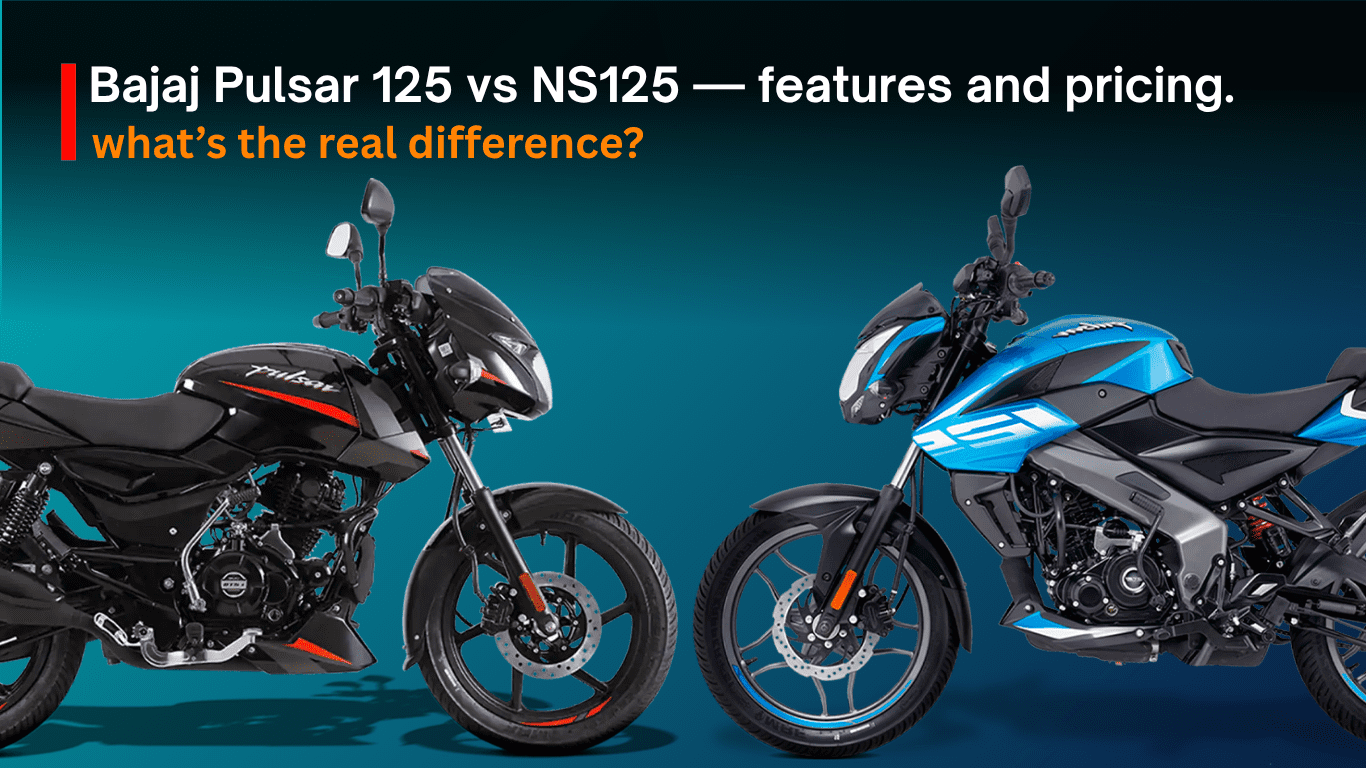
If you’re entering the 125cc motorcycle segment in India, chances are you’ve already seen the Pulsar name everywhere. And sooner or later, you’ll face a confusing choice: Should you buy the Pulsar 125 or spend extra for the Pulsar NS125?
At first glance, they seem almost identical. Same brand. Same engine size. Same sporty positioning.But look closer, and the difference isn’t just about numbers, it’s about philosophy.
One is built for efficiency and practicality. The other is built to look and feel more exciting. The real question isn’t which one is better. It’s whether the extra money for the NS125 actually improves your daily riding—or just your ego.
Engine Performance: Small Difference on Paper, Noticeable Difference in Feel
Both motorcycles use engines around the same size, roughly 125cc. But they’re tuned differently, and that changes how they behave on the road. The Pulsar 125 produces slightly less power, focusing on smoothness and efficiency. It feels predictable, calm, and easy to ride in traffic. It doesn’t rush—but it doesn’t struggle either.
The NS125 produces slightly more power and feels sharper when accelerating. Twist the throttle, and it responds quicker. It feels more energetic, especially when overtaking or riding aggressively. But here’s the reality most buyers overlook: the difference isn’t dramatic.
The NS125 feels sportier—but it doesn’t transform the riding experience completely. It’s an improvement, not a revolution.So the real question becomes:
Do you actually need sharper performance—or just want it?
Design and Visual Appeal: Mature Simplicity vs Streetfighter Drama
This is where Bajaj clearly separates the two bikes. The Pulsar 125 looks clean and traditional. It carries the classic Pulsar identity, muscular but not aggressive. It looks practical and sensible. It’s the kind of motorcycle that blends into everyday life without demanding attention.
The NS125, on the other hand, wants attention. Its exposed frame styling, aggressive tank extensions, and streetfighter stance make it look more serious. It doesn’t just look like transportation, it looks like a statement. For younger riders, this matters. Image matters. Presence matters. But design is emotional. And emotions often cost money.
Features and Technology: Is the Premium Justified?
This is where the NS125 begins to justify its higher price.
Depending on the variant, it offers:
- LED lighting
- Bluetooth-enabled instrument cluster
- Wider tyres
- ABS availability in higher trims
The Pulsar 125, in comparison, focuses on essentials. It gives you what you need—but not much beyond that.
This creates a clear divide.
The Pulsar 125 focuses on function.
The NS125 focuses on experience.
But again, the question becomes practical. Do these features improve your daily commute—or simply make the motorcycle feel newer?
Ride Experience: Easy Comfort vs Sporty Confidence
Because the Pulsar 125 is lighter and tuned conservatively, it feels easier to handle in city traffic. It’s comfortable. Predictable. Effortless.
The NS125 feels slightly heavier but more stable at higher speeds. Its wider tyres provide better grip and confidence, especially when riding aggressively .This makes the NS125 feel more planted—but slightly less effortless in tight traffic.
So the choice becomes clear:
The Pulsar 125 prioritizes comfort and ease.
The NS125 prioritizes confidence and engagement.
Pricing Reality: This Is Where Most Buyers Make Their Decision
The Pulsar 125 is noticeably cheaper. And that price difference isn’t small for many buyers in this segment.
The NS125 costs more—but not dramatically more. Still, this raises an important question: Is the extra cost buying better performance, or simply better perception? Mechanically, both motorcycles remain very similar at their core. What you’re really paying extra for is styling, features, and emotional satisfaction. Not necessity.
Ownership and Running Costs: The Advantage of Simplicity
Both motorcycles share Bajaj’s strong service network and affordable maintenance. But the Pulsar 125 holds a small advantage in long-term affordability, not because it’s dramatically cheaper to maintain, but because it costs less upfront.
And for many commuters, upfront cost matters more than minor feature upgrades. The Pulsar 125 delivers everything essential, without stretching your budget.
Wrapping it up
The Pulsar 125 is the rational choice. It’s efficient, affordable, and practical. It delivers everything you need without unnecessary extras.
The NS125 is the emotional choice. It looks sharper, feels more exciting, and offers modern features that enhance the riding experience.
The Pulsar 125 focuses on transportation.
The NS125 focuses on identity.
If your motorcycle is primarily a tool for commuting, saving money, and reliability, the Pulsar 125 makes more sense. But if your motorcycle is also part of your personality, something you want to enjoy, not just use, the NS125 justifies its premium because in the end, the real difference isn’t about engine size. It’s about whether you ride for efficiency or for excitement.
What is the main difference between Bajaj Pulsar 125 and Pulsar NS125?
The key difference lies in engine tuning and design. Both bikes use a 124.4 cc engine, but the NS125 produces slightly higher power and feels sportier due to its perimeter frame and aggressive styling. The Pulsar 125, on the other hand, is tuned for everyday commuting, with a more relaxed riding posture and better fuel efficiency.
Which is better for daily commuting — Pulsar 125 or NS125?
For daily city rides, the Pulsar 125 is more practical thanks to its comfortable ergonomics, lighter weight, and higher mileage. The NS125 suits riders who prefer a sportier feel and stronger mid-range performance but don’t mind a slightly firmer seat and lower fuel economy.
What is the on-road price difference between Pulsar 125 and NS125 in Delhi (2025)?
As of late 2025, the Pulsar 125 costs around ₹1.05 lakh (on-road Delhi), while the Pulsar NS125 is priced near ₹1.22 lakh (on-road Delhi). The NS125’s higher price reflects its premium design, perimeter frame, and sport-bike dynamics.