
For nearly four years, Formula 1 had become predictable. Max Verstappen wasn’t just winning races—he was redefining dominance. Red Bull’s performance advantage and Verstappen’s relentless precision had turned championship battles into formalities rather than contests. But in 2025, that narrative collapsed.
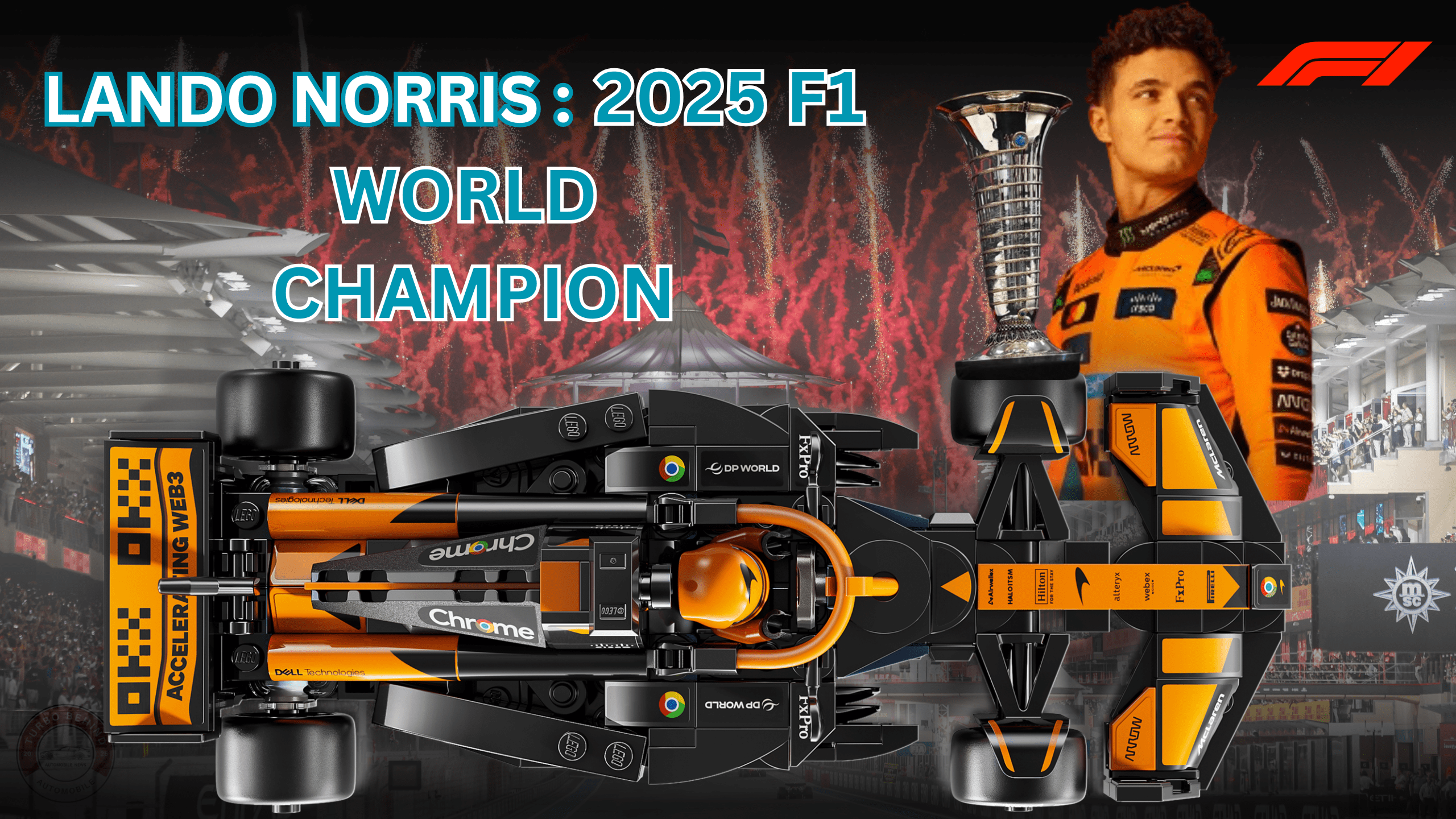
Under the Yas Marina floodlights in Abu Dhabi, Lando Norris didn’t need to win the race to win the war. Crossing the finish line in third place, he secured enough points to become the 2025 Formula 1 World Champion, defeating Verstappen by a razor-thin margin of just two points.
This wasn’t merely a championship victory. It was the moment Formula 1 entered a new era—where dominance was no longer guaranteed, and a new leader emerged to challenge the sport’s established hierarchy.
How Norris Transformed From Contender to Champion
Lando Norris’s championship wasn’t built on luck. It was built on consistency, precision, and mental resilience.
From the opening race in Bahrain, Norris signaled his intent. He wasn’t chasing podiums anymore—he was chasing the championship itself.
Key victories throughout the season included:
- Bahrain — Season-opening statement win
- Australia — Strategic dominance under pressure
- Japan — Technical and tactical perfection
- China — Clinical execution against Red Bull pace
- Monaco — The ultimate test of driver precision
Each victory reinforced one fact: Norris wasn’t benefiting from opportunity—he was creating it.
Even setbacks failed to break his momentum. DNFs in Canada and Singapore could have derailed his title challenge, but Norris responded with composure rather than panic.
Champions are defined not by avoiding adversity—but by overcoming it.
Verstappen Remained Relentless — But Dominance Alone Wasn’t Enough
Max Verstappen didn’t lose the championship easily. He fought until the very last lap of the season.
With nine race wins, Verstappen remained the most aggressive and fearless driver on the grid.
Their rivalry escalated dramatically throughout the season.
Key flashpoints included:
- Saudi Arabia — High-risk wheel-to-wheel confrontation
- Suzuka — Verstappen’s aggressive defense against Norris
- Zandvoort — Norris overtaking Verstappen in his home race
These weren’t just races. They were psychological battles.
For the first time in years, Verstappen wasn’t controlling the championship—he was defending it.
That difference changed everything.
McLaren’s Technical Renaissance: The Machine Behind Norris’s Title
Driver talent alone cannot win championships in modern Formula 1. Engineering defines outcomes.
McLaren’s technical transformation was one of the most important stories of the season.
Key performance improvements included:
- Improved aerodynamic efficiency
- Better tire management performance
- Superior race pace consistency
- Optimized energy recovery systems
McLaren evolved from a competitive team into a championship-winning operation.
The car finally matched Norris’s ability.
That combination proved unstoppable.
Abu Dhabi: The Race That Changed Formula 1’s Balance of Power
The final race of the season wasn’t about speed—it was about control.
Norris entered Abu Dhabi with a narrow points advantage over Verstappen.
One mistake could cost everything.
Verstappen delivered a flawless performance, winning the race.
But Norris didn’t need victory. He needed precision.
Finishing third, Norris secured enough points to win the championship.
Verstappen had done everything right—but it wasn’t enough.
For the first time in years, Verstappen’s dominance had been broken—not by failure, but by competition.
The Emotional Moment That Defined Norris’s Journey
When Norris crossed the finish line, the magnitude of the achievement became clear.
His radio message captured the moment perfectly:
“We did it. We’re World Champions.”
It wasn’t just relief. It was validation.
Years of development, criticism, and pressure had culminated in this moment.
McLaren mechanics celebrated a championship they had waited nearly two decades to reclaim.
For the first time since Lewis Hamilton in 2008, McLaren stood at the top of Formula 1 again.
The Statistics Tell Only Part of the Story
Norris’s championship numbers were impressive:
- 423 total championship points
- 7 race victories
- 18 podium finishes
- Championship decided by 2 points
But numbers alone cannot explain the significance of the achievement.
Norris didn’t inherit dominance. He earned it.
He defeated the sport’s most dominant driver through consistency and performance.
That distinction matters.
Why This Championship Signals a New Era in Formula 1
Formula 1 thrives on competition—not predictability.
Verstappen’s dominance had created an era of technical superiority.
Norris’s victory restored uncertainty to the championship battle.
That unpredictability is essential to the sport’s future.
This championship represents more than a new winner.
It represents the return of competitive balance.
What Norris’s Victory Means for the Future of Motorsport Technology
Formula 1 has always influenced automotive innovation.
Advancements in areas like:
- Aerodynamics
- Hybrid powertrains
- Thermal efficiency
- Lightweight construction
Eventually reach road cars.
McLaren’s engineering resurgence will influence future performance vehicle development.
Motorsport remains the ultimate proving ground for performance technology.
Wrapping It Up: Norris Didn’t Just Win the Championship — He Changed Formula 1’s Future
Lando Norris’s 2025 Formula 1 World Championship victory wasn’t just a personal achievement. It was a turning point for the sport itself.
For years, Max Verstappen defined Formula 1’s competitive landscape. But dominance in motorsport is never permanent.
Norris proved that consistency, precision, and technical evolution can overcome even the strongest competitors.
His victory restored unpredictability, revived McLaren’s legacy, and redefined the championship battle.
Verstappen wasn’t defeated by circumstance. He was defeated by performance.
And in doing so, Lando Norris didn’t just win the championship.
He ushered Formula 1 into its next era.
The future of Formula 1 no longer belongs to a single dominant force.
It belongs to competition again.