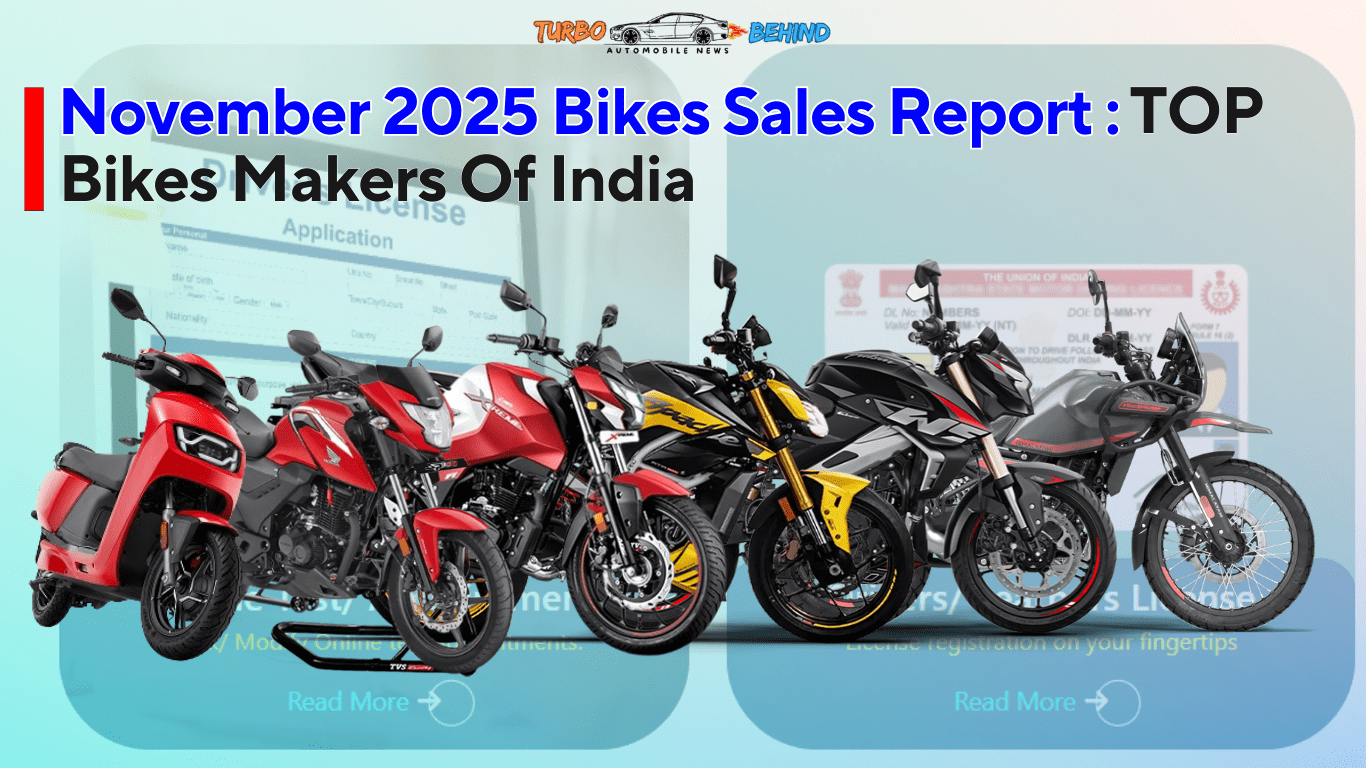
India’s two-wheeler market is one of the largest and most competitive in the world. And, not surprisingly, as the last days of November 2025 passed, Hero MotoCorp, Honda, TVS, Bajaj, Royal Enfield, and Suzuki were once again battling it out for every percentage point of the market.
The situation here has changed, as customers’ preferences evolve, heading towards the highest levels, and electric vehicles are entering the market, and brands are reinventing themselves for the next decade. But what can we say for now about the current state of the industry? Let’s see.
November 2025 Two-Wheeler Sales Ranking: Hero Leads, But Is the Gap Truly Secure?
Here’s how India’s top two-wheeler manufacturers performed in November 2025:
| Rank | Manufacturer | Sales (Units) |
|---|---|---|
| 1 | Hero MotoCorp | 8,86,513 |
| 2 | Honda Motorcycle & Scooter India | 6,06,200 |
| 3 | TVS Motor Company | 4,51,988 |
| 4 | Bajaj Auto | 3,02,835 |
| 5 | Royal Enfield | 1,15,233 |
| 6 | Suzuki Motorcycle India | 1,04,605 |
While Hero MotoCorp enjoys an almost unrivaled dominance in the Indian two-wheeler market, the company faces strong competition from rivals, which are gaining ground in the segments that are set to define the future of the motorcycle industry. In particular, competitors are proving to be serious contenders in the premium motorcycle, performance bike, and electric vehicle markets.
Hero MotoCorp (8,86,513 Units): Still India’s King, But Can It Hold the Crown?
Hero MotoCorp continues to lead the Indian motorcycle market, with monthly sales of two-wheelers numbering in the hundreds of thousands, representing some of the most popular models among Indian commuters:
- Splendor
- HF Deluxe
- Passion
- Glamour
- Xpulse
- Maestro scooters
This has made these models a staple purchase for millions of Indians.
Why Hero Still LeadsSignificant rural and semi-urban footprint
- Industry-leading fuel efficiency
- Lower maintenance costs
- Extensive dealer network in India
Hero’s main asset is its ability to provide affordable transportation solutions. The company’s key challenge is that the future belongs to electric scooters and premium segments, where it does not have such a clear advantage.
Honda (6,06,200 Units): The Silent Giant Strengthening Its Grip
nda continues to be the main competitor to Hero due to its significant scooter dominance in the market.
The company’s top-selling motorcycles are:
- Activa
- Shine
- Dio
- SP125
- Hornet
Just the Activa model alone significantly impacts Honda’s total sales volume.
The Factors that make Honda a serious competitor are:
- Industry-leading engines
- Established brand image
- Scooter segment leadership
- Reliable products
While Honda’s approach to expanding its market share may appear to be of a moderate risk profile, its impact on the overall market is difficult to underestimate.
TVS Motor (4,51,988 Units): The Brand Quietly Building India’s Future
TVS has carved its niche across multiple segments.
Notable models that have contributed to their success are:
- Apache RTR series
- Raider 125
- Jupiter scooter
- Ntorq scooter
- iQube electric scooter
TVS, unlike its competitors, is not limited to a single segment.
TVS’s Greatest Strength
While most manufacturers have to choose between either performance or commuter bikes, TVS has mastered the art of balance and focuses on both. In addition to this, it has even expanded its reach to electric scooters. The iQube EV is a prime example of TVS’s commitment to innovation. All of these combined factors point towards a promising future for the brand.
Bajaj Auto (3,02,835 Units): Performance Legacy Still Driving Growth
Bajaj continues to maintain strong sales thanks to iconic motorcycles like:
- Pulsar series
- Platina
- CT100
- Dominar
The Pulsar brand alone has shaped India’s performance motorcycle culture.
Bajaj’s Key Advantages
- Strong enthusiast following
- Competitive pricing
- Export market strength
- Performance-focused product identity
Bajaj may not lead in volume, but it leads in performance perception.
Royal Enfield (1,15,233 Units): Premium Segment King Faces New Competition
Royal Enfield’s success exemplifies the rising importance of emotional buying factors among Indian consumers.
Key contributors to its success include:
- Classic 350
- Hunter 350
- Meteor 350
- Bullet 350
- Interceptor 650
- Continental GT 650
Royal Enfield has created a strong cultural dominance that few motorcycle manufacturers can rival.
Factors contributing to its success:
- Established brand image
- Community of enthusiasts
- Premium brand positioning
- Emerging touring culture
However, Royal Enfield faces increasing competition from motorcycle manufacturers entering the premium segment
Suzuki (1,04,605 Units): Small Volume, Strong Reputation
Suzuki’s growth is consistent and is supported by such high-quality and reliable motorcycles as:
- Access 125
- Burgman Street
- Gixxer series
- Avenis scooter
Suzuki prioritizes quality and brand building over quantity. While this approach might affect the company’s growth potential, it enhances the brand’s desirability and perceived value.
Market Trends November 2025: What These Numbers Actually Reveal
There are a few important trends that stand out in the November 2025 data:
1. Commuter Motorcycles Still Rule India
While electric vehicles continue their rise, commuter motorcycles still provide a vital transport category for millions of Indians, with fuel efficiency being the single most important purchasing factor.
2. Premium Motorcycles Are A Fast-Growing Category
Royal Enfield’s success speaks to an Indian buyer’s growing preference for:
- Style
- Performance
- Brand equity
This trend is likely to accelerate.
3. Electric Vehicles Present The Greatest Long-Term Threat
TVS and Hero’s focus on developing electric scooters will have a major impact on the two-wheeler market in the next decade.
4. Rural Markets Still Drive The Bus
Hero’s success speaks to the importance of the rural Indian market, which will remain vital for several years to come.
Why Hero Leads Today But the Future Is Still Uncertain
Hero MotoCorp’s leadership in the two-wheeler industry is built on its commuter motorcycles. But future growth will be driven by:
- Electric vehicles
- Premium segment
- Technology innovation
TVS and Honda are targeting these areas hard. The fight for the future of two-wheelers is far from over.
Wrapping It Up:
While MotoCorp continues to dominate India’s two-wheeler market, the situation could change rapidly as the world embraces electric vehicles. Premium motorcycles are on the rise, and performance is increasingly valued over comfort.
It is not enough to simply cater to the commuter who buys a used motorbike every few years. The next generation of Indians will be more interested in high-performance motorcycles rather than their parents’ humble cycles.
Hero rules the roost, but Honda is not far behind. TVS is set to leapfrog the competition. Bajaj and Royal Enfield are poised to take over the emotional and performance space. The winners of India’s two-wheeler market may not be decided in the next five years.